Continuous evaluation of what changes for young people, adults, schools and communities through live4Life
16 YEARS OF IMPACT EVIDENCE
Live4Life has built a substantial evidence base by investing in research, evaluation and monitoring since it was first trialled in 2010.
22 unique sources of data assembled over 16 years.
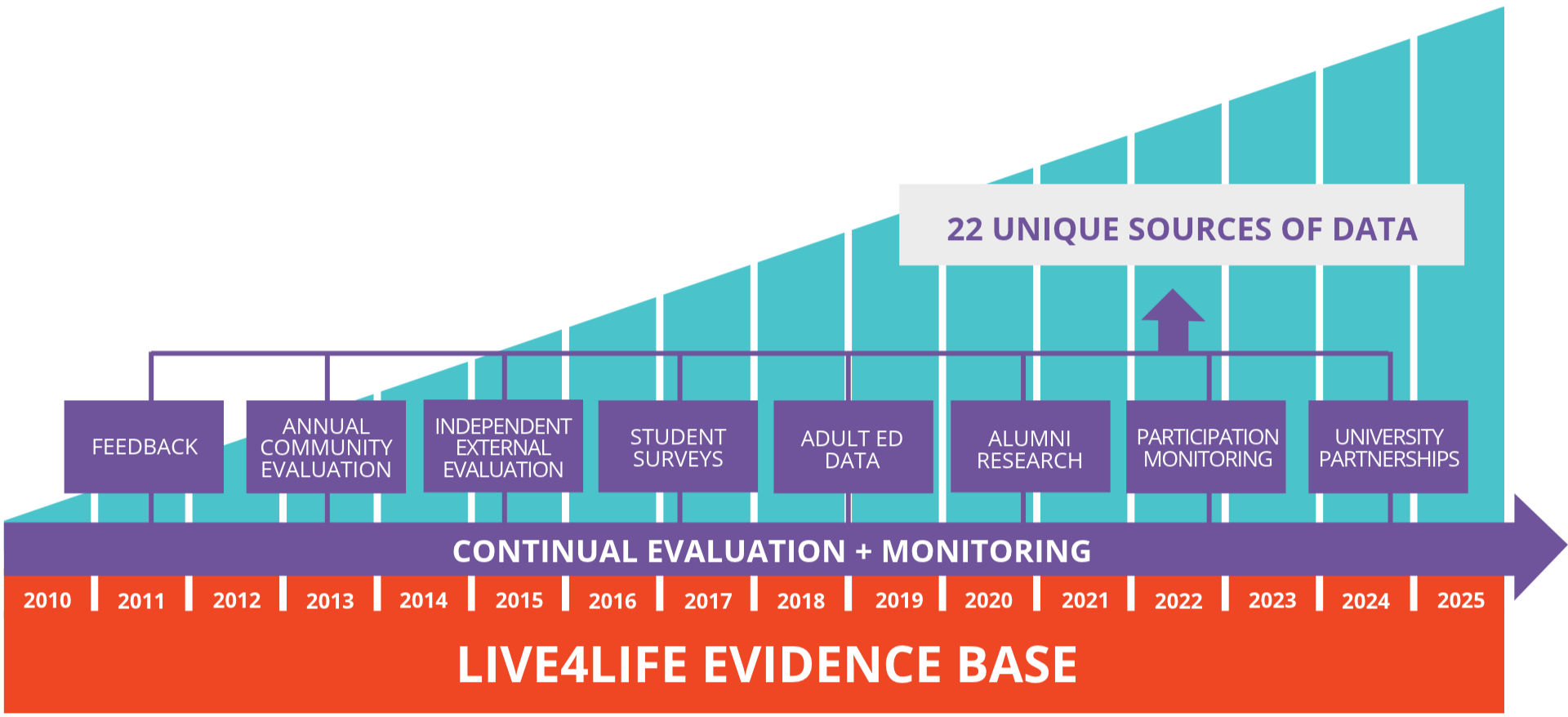
The evidence base now includes annual community evaluations, independent external evaluations, student feedback surveys, adult education data, Crew and Crew4Life evaluations, Crew alumni research, Partnership Group feedback, reach and participation monitoring, the University of Tasmania evaluation of the first Tasmanian Live4Life site, and current university-led research through the University of Melbourne and ALIVE.
This gives a much fuller and more useful picture than suicide rates alone. It helps show what is changing for young people, adults, schools and communities, and how Live4Life is building the conditions that make earlier support more likely.
Proven Outcomes
Young people know where to get help, act earlier and support peers
Adults are better equipped to respond
Communities build local prevention capability around young people
The evidence shows Live4Life strengthens the conditions needed to prevent suicide.

Breadth of evidence

Annual community evaluations Model formation, implementation learning, early outcome patterns

Independent evaluations Transferability across rural communities, external outcome evidence, social/economic value

Student feedback and monitoring Changes in literacy, confidence, help-seeking, stigma and action after participation
Youth participant and alumni research Youth leadership, connection, belonging, confidence, peer support, advocacy

Partnership and implementation data Governance, local ownership, delivery quality, community capability

University-led and longitudinal research Baseline needs, longer-term outcomes, stronger synthesis over time
Key findings across the evidence base
Mental Health Literacy Live4Life builds shared mental health language and practical knowledge.
Help-seeking + Action Young people are using what they learn to seek support and help others do the same.

Stigma + Conversations Live4Life helps make mental health easier to talk about, shifts the culture so conversations can start earlier and feel safer.

Confidence to Help Young people and adults report greater confidence to notice concerns and support others.

Community + Social Value Partnership Groups build local prevention capability. Live4Life can generate social and economic value.

Connection + Youth Leadership Live4Life creates connection between young people, schools, services and community. Young people have a real role in leading mental health change.

Measuring suicide prevention outcomes is complex. No single community program can credibly claim that it directly reduces suicide deaths, particularly in smaller regional populations where numbers fluctuate and many social, economic, health and service-access factors interact.
What can be measured, and what matters for prevention, is whether a program is strengthening the protective conditions that reduce risk over time. For Live4Life, this includes mental health literacy, earlier help-seeking, peer support, trusted adults, reduced stigma, connection, leadership and clearer pathways to care.
